
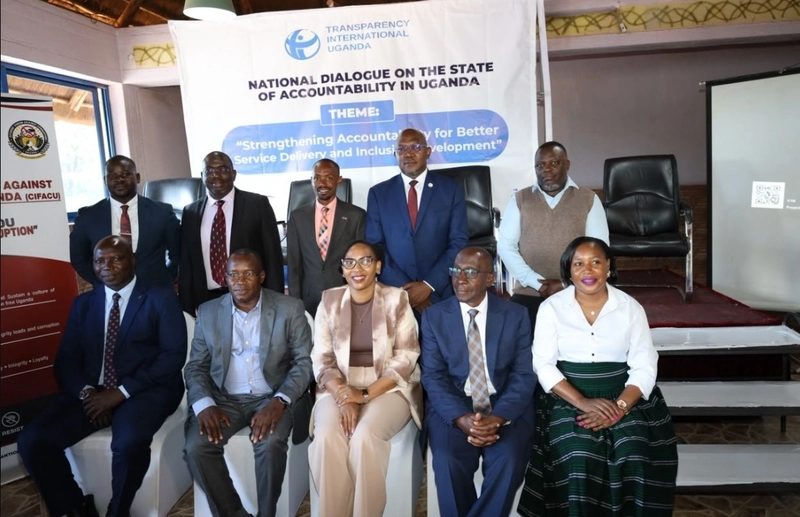
Strengthening Accountability: IG Joins Transparency International Uganda'S National Dialogue
Nov. 11, 2026
The Inspectorate of Government (IG) has called for practical action, stronger enforcement and tangible results in the management of public resources during the National Dialogue on the State of Accountability in Uganda, organised by Transparency International Uganda at Hotel Africana, Kampala.
The dialogue, held under the theme *“Strengthening Accountability for Better Service Delivery and Inclusive Development,”* brought together representatives from Ministries, Departments and Agencies (MDAs), the private sector, academia, Civil Society Organisations (CSOs), development partners and accountability institutions to examine Uganda's accountability landscape and identify practical measures for strengthening transparency, oversight and responsible management of public resources.
The Inspectorate of Government was represented by a delegation led by *Mr Gerald Gwaira, Director of Research, Education and Advocacy*, accompanied by *Ms Christine Lamwaka, Assistant Director, Advocacy and Capacity Building*, and *Mr Joseph B. Muramuzi, Inspectorate Officer*
IG Calls for Practical and Enforceable Accountability Measures
Addressing participants, Mr Gwaira emphasised the importance of translating discussions and institutional commitments into clear, enforceable resolutions that deliver tangible improvements in public service delivery.
“The National Dialogue must deliver more than discussion. It must produce clear, enforceable resolutions. Public money must be used for its intended purpose, because accountability is measured where citizens receive the services they deserve,” Mr Gwaira emphasised.
He noted that accountability should go beyond policy discussions and institutional commitments to ensure that public resources are utilised for their intended purposes and that citizens receive the services they deserve.
Collective Responsibility in the Fight Against Corruption
In his remarks, *Mr Koro, Vice Chairperson of Transparency International Uganda* underscored the importance of collective responsibility in the fight against corruption.
He highlighted the responsibility of Government, Parliament, civil society, religious leaders, academia and citizens in demanding accountability, exposing weaknesses in public service delivery and ensuring that public resources benefit their intended beneficiaries.
Strengthening Institutional Frameworks
Delivering the opening remarks, *Ms Rebecca Atwine, Special Presidential Assistant on Anti-Corruption*, highlighted the progress Uganda has made in strengthening its legal, policy and institutional frameworks for combating corruption.
She acknowledged the successes registered in the fight against corruption while noting that significant challenges remain. She pointed to the persistent and evolving nature of corruption, which continues to undermine interventions and frustrate efforts aimed at improving service delivery and achieving sustainable development.
The discussions further highlighted the role of accountability institutions, including the Office of the Auditor General, the Inspectorate of Government, Resident District Commissioners (RDCs) and Parliamentary Accountability Committees, in promoting transparency, oversight and responsible management of public resources.
Participants emphasised the need to strengthen enforcement and follow-up mechanisms to ensure that findings and recommendations from accountability institutions translate into corrective action, value for public money and improved service delivery.
Strengthening Collaboration for Better Service Delivery
The dialogue reinforced the importance of collaboration among Government institutions, accountability agencies, civil society, development partners and citizens in addressing corruption and promoting good governance.
The Inspectorate of Government appreciates *Transparency International Uganda* for convening the National Dialogue and providing a platform for stakeholders to exchange ideas, share experiences and strengthen collective efforts towards transparency, integrity and accountability.
The Inspectorate of Government remains committed to promoting good governance, combating corruption, enforcing the Leadership Code of Conduct and strengthening accountability in public institutions to ensure that public resources are utilised for their intended purposes and that Ugandans receive the services they deserve.